


A couple of years ago we set posts for a 120-foot cedar fence between two neighbors who shook hands on splitting costs. After posts were in the ground and materials were on-site, one neighbor backed out. No written agreement existed. The result was a small claims case and a lot of wasted money. A one-page document would have prevented the entire mess.
Key takeaways
- A simple written fence agreement between neighbors can prevent 90% of the disputes we see on real jobs.
- The agreement should cover cost sharing, fence height, location on the property line, and how future repairs will be handled.
- Including a basic dispute resolution process and a reference to local legal options saves serious stress if things go sideways.
- Sign and date the agreement before any materials are ordered or posts are set.
- Written agreements are crucial for shared fence responsibilities, and they protect both current and future owners.
Why we always push for a written fence agreement
Handshake deals on a shared fence lead to arguments about cost sharing, fence height, and who owns which respective sides. We’ve seen it dozens of times. A sample fence agreement between neighbors is not a complicated legal contract. It’s a clear written understanding in plain English that both parties agree to before construction starts.
If this were our property, we would always get a signed, dated agreement before ordering a single board. Effective communication helps avoid conflicts over shared fences, but open communication alone is not enough when money is involved. Document all discussions, agreements, and decisions in writing signed by all parties. Keep it simple enough that both neighbors actually read it, but detailed enough to cover money, maintenance, and dispute resolution.
Confirming property lines before you put anything in writing
We never set a post until we’re confident about the boundary line. A professional property survey confirms the boundary line for the shared fence, and land surveys to determine property boundaries cost between $200 and $1,200 depending on lot size and complexity. That’s far cheaper than a boundary lawsuit.
Clearly define the exact location of the fence to avoid boundary encroachment issues. Your agreement should detail property identification including exact addresses and a plat map. Reference the survey directly, for example: “Fence to be built along the surveyed boundary between 123 Oak Street and 125 Oak Street per survey dated May 3, 2026.” If the fence is intentionally placed a few inches inside one property, state that explicitly so ownership and maintenance are not confused later.
Key points every neighbor fence agreement should include
This agreement establishes terms for the construction, maintenance, and shared costs of a boundary fence. Here’s what we recommend covering:
- Names and addresses. Full legal names of both owners, street addresses, and which fence line is being discussed (e.g., “the north property line between the two homes”).
- Fence description. Specify the type of fence including height, color, and which side faces each neighbor. For example: 6 ft cedar board-on-board privacy, good neighbor style.
- Ownership. State whether the fence is jointly owned 50/50 on the property line or owned by one neighbor with some cost sharing. A shared fence is legally co-owned by both neighbors.
- Cost sharing. Outline how the expenses for materials, labor, and installation will be split, with real numbers.
- Maintenance and repair. Detail who is responsible for future repairs, cleaning, or maintenance of the fence. Include a clause outlining how disagreements over repairs will be handled.
- Code compliance. Document that both parties agree to the installation and comply with local building codes and zoning laws. It is recommended to check local zoning ordinances and review fence agreements with a real estate attorney.
- Dispute resolution. A simple path: talk first, then mediation, then legal options as a last resort.
Cost sharing and payment terms that actually prevent arguments
Most neighbor fights we see are about money, not the fence itself. In our experience, the most common approach is 50/50 on a shared fence, with one neighbor paying extra for any upgrades they want. Neighbors usually share the cost of maintaining a shared fence, so put that expectation in writing from day one.
We recommend putting real numbers in the agreement. For example: estimated cost of $6,400 for 120 linear feet of 6 ft cedar in 2026, each neighbor pays $3,200. Specify what happens if the total cost changes by more than 10%. Include payment timing: deposit date, final payment date, and whether each neighbor pays the contractor directly.
Extras like decorative caps, staining, or a taller fence height should be clearly marked as optional, with the requesting neighbor covering those expenses. If one neighbor backs out after signing, the agreement should state that the withdrawing party covers any non-refundable materials or survey costs already incurred.
Agreeing on fence height, style, and location so nobody is surprised
We often see tension when one neighbor wants more privacy and the other cares about views. Local fence laws vary by location and dictate fence regulations, but most city codes limit backyard maximum height to 6 ft and front-yard fence height to 3–4 ft.
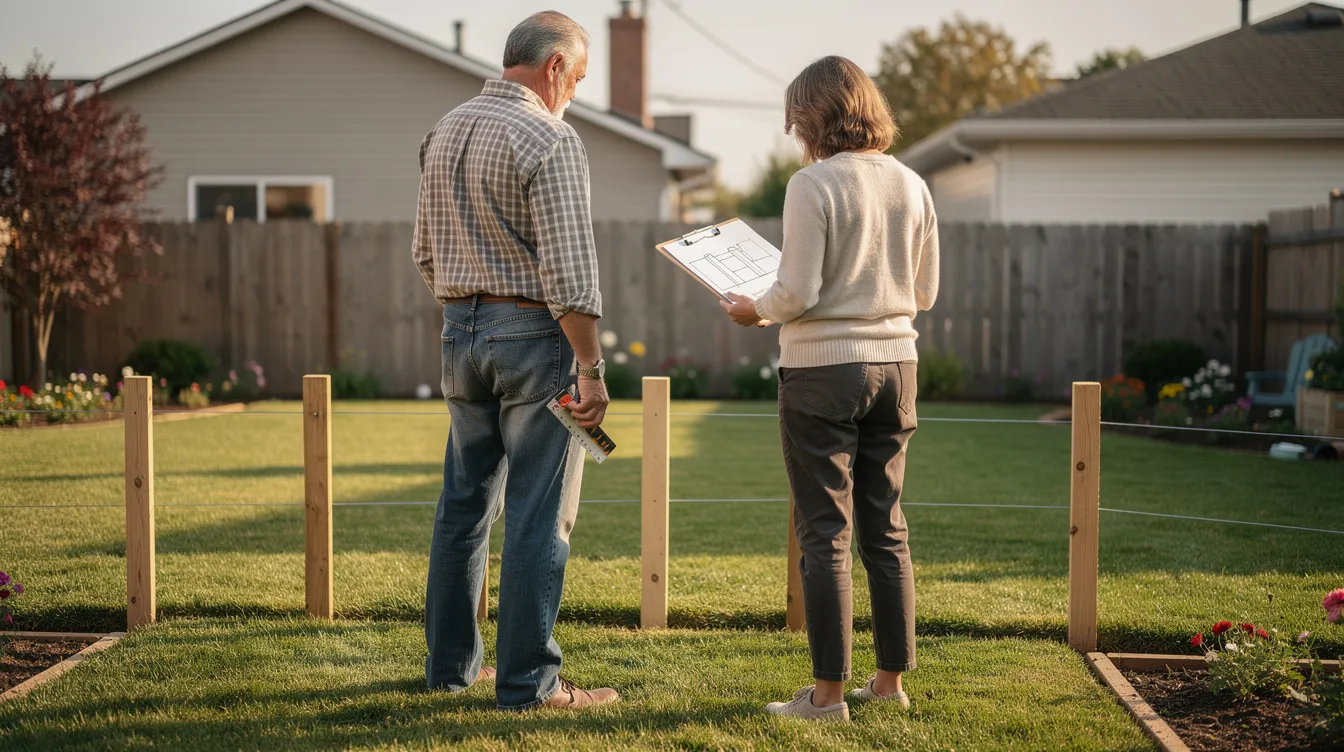
Walk the property line together. Mark the proposed location with paint or stakes before signing. Put these details in writing: exact fence height, style, material, post spacing, and which side faces which neighbor. California’s Good Neighbor Fence Law presumes shared fence ownership, and that “good neighbor” concept where both respective sides look finished is worth noting in the agreement if that’s what both owners want. If one yard sits higher than the other, address grade changes and who pays for any retaining sections. You can build a fence on your own property if a neighbor disagrees with a shared fence, but that changes the cost sharing and ownership picture entirely.
Maintenance, repairs, and what happens years down the road
Most fences live 15–25 years, often outlasting the current owners and sometimes the relationship. That’s why maintaining the fence in good condition needs to be spelled out now.
Write in how routine upkeep is handled: staining schedules, hardware tightening, vegetation trimming on both sides. Neighbors must share costs for maintaining a shared fence. Neither party shall alter, paint, stain, or attach fixtures to the shared side of the fence without consent. If the fence is damaged due to one party’s negligence, that party shall be solely responsible for repair costs for that section.
For storm damage or a falling tree, we recommend agreeing now that both owners split replacement costs equally on the shared run. This agreement shall be binding upon and benefit the parties, successors, heirs, and assigns. Attach a copy to your closing documents when selling so future owners understand their responsibilities.
Dispute resolution and legal options if things go wrong
We always push open communication first and legal action last. Establish how conflicts regarding the fence will be handled before escalating to legal action. Neighbors must agree before making changes to a shared fence, and neighbors cannot remove a shared fence without mutual consent.
A simple dispute resolution ladder works well:
- Direct conversation between both parties
- Written notice if the issue is unresolved after 30 days
- Mediation through a local community program (mediation is a recommended first step before legal action)
- Legal options as a last resort
Legal action can be pursued within 21 days of notice in many jurisdictions. For disputes involving encroachment or unauthorized fence removal, seeking legal assistance from a local real estate attorney is worth the consultation fee. Our sample agreement is not a substitute for legal counsel. If the relationship is already hostile, get independent legal advice before signing anything.
Simple sample neighbor fence agreement template you can adapt
Below is a practical template. Customize it with your own names, dates, and numbers. You can draft this in Google Docs or on paper.
Parties and properties John and Maria Smith of 123 Oak Street and Alex and Jamie Lee of 125 Oak Street. Agreement date: July 15, 2026.
Fence description 6 ft tall cedar board-on-board privacy fence, 120 linear feet, constructed on the shared boundary line per survey dated May 3, 2026.
Cost sharing Total estimated cost: $6,400. Each neighbor pays $3,200 directly to the contractor. Deposit of $1,600 per party due at contract signing; final payment upon project completion.
Maintenance Both parties are equally responsible for routine maintenance, staining, and repair of the shared run. Damage caused by one party’s negligence is that party’s sole expense.
Dispute resolution Parties agree to resolve disagreements through conversation first, then written notice, then mediation before pursuing any court action.
Signatures and date Both neighbors sign and date. Each keeps a signed copy with their home records.
What we’d do if this were our own shared fence
- We’d verify the property line with a current survey before discussing design or cost sharing with any neighbor.
- We’d choose a code-compliant fence height and common material like 6 ft cedar privacy to keep the plan fair and the expenses reasonable.
- We’d write up a one-page agreement with specific numbers, a date, fence details, and have everyone sign before scheduling installation.
- We’d agree in writing on how to handle storm damage, future staining, and any upgrades one neighbor wants but the other doesn’t care about.
- We’d attach a copy of the signed agreement to any future sale paperwork so the next owners understand what they’re walking into.
Frequently asked questions about neighbor fence agreements
Do I really need a written fence agreement if my neighbor and I get along?
Relationships and ownership can change. We’ve seen good friendships sour years later when money and repair costs come up. A simple agreement in writing, signed and dated before work starts, keeps things calm and clear for both current and future owners.
What if my neighbor refuses to share the cost of a new fence?
Cost sharing is often assumed but not always legally required. Rules vary a lot by city and state. You can build on your own land, choose a simpler design to cut expenses, or offer to pay more if you want a taller fence or premium material. If your area expects equal cost sharing for a boundary fence, talking to a local attorney or your city code office is a smart next step.
Can a neighbor change or tear down a shared fence without my consent?
A true shared fence on the boundary line is typically co-owned, and one owner usually cannot remove or alter it without the other’s consent. Local regulations differ, but removing a shared fence without agreement can expose that neighbor to legal and financial claims. Refer to your written agreement and local law first, then consider seeking legal assistance if a neighbor acts without your approval.
How specific should we be about fence height and design in the agreement?
From our experience, the more specific you are, the fewer surprises on install day. List exact fence height, material, color or stain plan, post size, and any decorative features. Make sure everything is in compliance with local fence codes. If one neighbor later wants to add lattice on top or change the length, that should be a new written add-on agreement.
Should we get the fence agreement notarized?
Notarization isn’t usually required for a basic neighbor fence agreement, but it adds formality and serves as a free or low-cost witness to the signatures. We’d recommend it if the relationship is already tense or if the agreement will be recorded with county records. Ask a real estate attorney during a consultation if you’re unsure whether notarization is helpful in your situation.